A moms and dad handing over their child is positioning massive trust in you. They hardly ever claim it out loud, but the underlying concern is always the very same: if something fails, will certainly you understand what to do in the first two minutes?
That is the actual purpose of child care first aid training. Not a certificate on the wall, not another tick in a compliance spread sheet, yet the confidence to act swiftly, smoothly and correctly when a kid's life or long‑term health depends on your following decision.
Express child care first aid courses and fast CPR refresher training aim to supply this competence on a limited schedule. Done well, they function. Done severely, they provide an incorrect complacency. The difference lies in the high quality of the training, just how honestly it mirrors the real world with kids, and whether it prepares you to think, not just to pass a test.
I have educated first aid and CPR training to nursery teams, childminders, sporting activities instructors, foster carers and parents for many years. The pattern is consistent: emergencies with youngsters hardly ever look like the scenario cards. They are noisier, messier, more complex and even more emotional. The right first aid course anticipates that.
This guide experiences what every carer ought to truly have the ability to do after express child care first aid training, exactly how express first aid and CPR courses are structured, and what to try to find when selecting a fast first aid course near you.
Why child first aid is various from adult first aid
Many individuals arrive at first aid and CPR training reasoning, "I did a first aid course at the office a couple of years ago; undoubtedly that covers kids also." It does not, a minimum of not adequately.
Children are not simply smaller sized adults. Their air passages, breathing patterns, physiology and psychological actions are different, and one of the most usual emergency situations are various too.
A couple of examples that constantly stand out in course:
- Infants and kids choke far more frequently than adults, commonly silently. Breathing problems, especially asthma and viral wheeze, dominate several childcare emergencies. Allergic reactions can rise from moderate breakouts to life‑threatening anaphylaxis in minutes. Head injuries in youngsters are incredibly common, however recognising when to stress is nuanced. Cardiac arrest in children is much much less typical, however when it occurs, it is typically second to breathing issues or trauma, not a main heart issue.
An express first aid course in Adelaide child care first aid course needs to recognize these distinctions. A generic fast first aid course that only skims child‑specific problems could be great for workplace team who see kids sometimes, yet not for very early years professionals, childminders or after‑school club leaders.
If you take care of children frequently, you need first aid training that spends significant time on paediatric situations, not just a fast add‑on at the end of an adult course.
What "express" childcare first aid training ought to still cover
"Express" or "fast" in this context ought to explain the means the course is delivered, not the depth of crucial web content. The time savings typically come from combined learning, tighter timetables and focused training, not from reducing crucial topics.
At an outright minimum, express child care first aid courses for carers should leave you positive with:
Assessing a youngster quickly and safely Managing a less competent kid Paediatric CPR and use of an AED Choking in babies and children Breathing troubles and asthma attacksIf a provider is advertising an express childcare first aid course that does not clearly include every one of these, deal with that as an indication. Extra essentials like hemorrhaging control, burns, allergies, seizures and head injuries must additionally feature, but those 5 items are non‑negotiable.
When centres promote fast first aid courses or express first aid training, ask directly how much time is invested in paediatric scenarios, hands‑on CPR method and choking drills. Genuine skill needs repetition and comments, and you can not press that endlessly without losing quality.
The core skills every childcare carer should really master
Not every first aid certificate reflects true competence. The objective is not just to sit through first aid training, however to leave able to carry out certain skills under pressure.
Rapid assessment: reading the circumstance in seconds
The very first thing a great express first aid course shows is not a bandage technique, but how to approach any type of incident without cold. The psychological sequence you wish to internalise goes something such as this:
First, look for risk to you, the child and others. Child care events usually happen in playgrounds, on actions, near hot drinks or in parking area. If you rush straight in, you risk adding a 2nd casualty.
Second, get a fast impression. Is the child awake? Breathing? Making sounds? Moving typically? Colour typical or pale/blue? Are they replying to you or to pain?
Third, call for proper assistance. This might be another employee, a supervisor to speak to parents, or the emergency situation services. Express childcare first aid training must offer you clear criteria for when to dial emergency numbers, when to go right to urgent treatment, and when to observe and document.
Without this organized analysis, even great technological abilities can be misapplied or delayed.
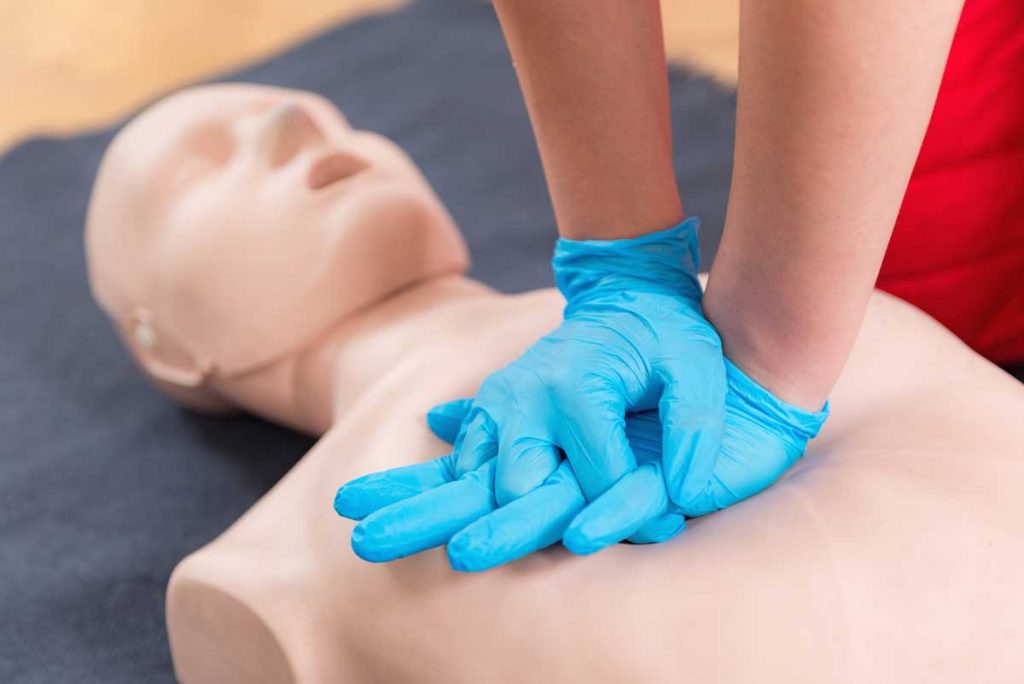
Paediatric CPR: compressions, breaths and AEDs
CPR courses for childcare need to concentrate on child‑specific methods. The proportions of breast compressions, the focus on rescue breaths, and the hand positioning all modification with age and size.
You ought to expect to practice:
- Infant CPR, generally on a child manikin, using 2 fingers for compressions and gentle smokes for breaths. Child CPR, commonly making use of a couple of hands depending upon the kid's size. How to adapt between baby, youngster and adult CPR if you look after a mixed‑age group, as in some clubs or holiday schemes. Using an AED securely on a youngster, including right pad positioning and when to make use of paediatric pads if available.
Express CPR courses that combine adult and youngster skills can function well if they give sufficient separate method time on paediatric manikins. A fast CPR correspondence course, usually taken by returning staff, must focus on restoring muscle memory via duplicated, reasonable technique as opposed to lengthy lectures.
What matters most is not that you remember every fine detail six months later on, yet that the course leaves you with a mental and physical image you can recall quickly when stress and anxiety hits.
Choking: the scenario that happens much too often
Child choking events are both common and frightening. Every very early years or childcare specialist I know has at the very least one story, whether it was a full blockage, a near‑miss, or a youngster that breathed in a little object.
Express childcare first aid training needs to go beyond "back impacts and breast thrusts" as a formula. It needs to walk you via:
- The difference between partial and complete blockage, and when to encourage coughing versus intervene. How choking presents in babies that can not stand or talk. How to sustain the infant securely along your upper leg or lower arm to supply efficient strikes without injuring them. The series for stomach thrusts in older kids, and why they are not utilized in tiny infants. What to do if a child faints while choking, and the web link between choking monitoring and CPR.
You needs to finish the first aid and CPR course having actually practiced these actions consistently, not just watched a demonstration. Lots of carers say the choking drills are the solitary most beneficial component of their express first aid courses.
Breathing problems, bronchial asthma and anaphylaxis
In child care settings, issues with breathing are extra regular than cardiac arrests by a big margin. Asthma, viral wheeze, croup, extreme allergies and stress and anxiety can all existing as "having a hard time to take a breath", yet the reactions differ.
A well developed express child care first aid course teaches you to acknowledge red‑flag patterns, such as:
- A youngster talking just in solitary words, or incapable to speak. Obvious sucking in of the skin in between the ribs or at the base of the neck. Noisy breathing that suddenly comes to be quiet. Blue or grey tint around the lips or fingertips.
You should be comfortable helping with recommended inhalers and spacers, and comprehend the standard distinction in between a reducer (often a blue inhaler) and preventer medications. For anaphylaxis, express first aid training need to consist of practice with auto‑injector trainers, covering various brand names and how to take care of once adrenaline is given.
The first aid certificate means little if, when confronted with a youngster whose breathing is plainly degrading, you wait due to the fact that you have never ever in fact held an auto‑injector in your own hands.
Injuries you are statistically most likely to see
Express childcare first aid courses in some cases focus on rare, dramatic occasions, while skimming past the important things you will certainly satisfy in the real world, week after week. A well balanced course should deal with both.
From years of incident reporting in nurseries and colleges, a few patterns emerge.
Minor head injuries are extremely usual, due to falls from standing, reduced furniture, playground tools or rough play. The obstacle is working out which children require immediate health center analysis and which can be safely observed. Training ought to cover indication such as duplicated throwing up, unusual drowsiness, seizures, confusion, intensifying headache or behavior that is plainly out of character.
Cuts and bleeding happen regularly, specifically on faces, lips and scalps, which hemorrhage greater than most carers expect. First aid training has to assist you evaluate when straightforward pressure and cleaning is enough, and when a child most likely demands stitches, glue or steri‑strips. It ought to also resolve the practical issue of managing other kids in the area while one is bleeding visibly.
Burns and scalds in child care typically originate from warm drinks, radiators, food preparation tasks or exterior equipment on warm days. Every express first aid course ought to enhance the value of early, long term cooling with awesome running water, and the correct use dressings or cling movie. I have actually lost matter of the amount of times I have actually seen well‑meaning team apply ice straight, butter, tooth paste or thick creams, every one of which can make evaluation and recovery worse.
Sprains, thought cracks and joint injuries often tend to follow falls or sports tasks. The priority is support, comfort, and preventing further damages, plus recording precisely what happened and what was done next for parents and healthcare professionals.
Good first aid and CPR training classes do not simply note these injuries; they utilize real‑world instances, photos (sensitively picked), and situations drawn from childcare settings to ensure that learners acknowledge occurrences when they happen.
How express courses press time without shedding quality
Fast first aid courses and express CPR training usually raise an apparent concern: is it actually possible to cover a lot in a shorter time?
The much better service providers make use of three major strategies.

First, blended discovering. Participants total concept content online in their own time prior to a much shorter, snugly focused useful session. This functions well for subjects like standard makeup, easy meanings and cpr course Adelaide lawful responsibilities. The in‑person session can after that spend mostly all of its time on hands‑on CPR, choking drills, bandaging and situation work. When done appropriately, an express first aid course can provide the exact same core abilities as a longer traditional course, with much less class sitting.
Second, concentrated, pertinent web content. In child care, there is no need to invest half an hour on industrial crush injuries or chemical burns if those threats do not exist in your setting. A fast first aid training session that is clearly customized to baby rooms, clubs or institutions wastes far much less time than a generic workplace first aid course.

Third, tight team administration. Small teams on each manikin, clear timings for drills, and trainers who keep up while still responding to inquiries. Express first aid training lives or dies on how self-displined the instructors are with timing.
The red flag is any express childcare first aid course that insists whatever can be performed in, claim, 90 minutes, consisting of evaluation, certification and breaks, without any previous learning. That is usually "fast certification" in the most awful feeling, and it receives the self-confidence of the participants.
What a strong child care first aid session seems like on the day
People commonly ask what to anticipate from express childcare first aid training if they have just ever participated in long, common classes.
A normal combined express first aid course might resemble this:
Before the day, you full 1 to 3 hours of online product. This covers standard first aid principles, lawful obligations, infection control, and an intro to paediatric makeup and common problems. Brief tests inspect understanding, and you get here with some common vocabulary.
On the day, the useful express first aid training runs for several hours. Early, you obtain made use of to evaluation routines and safe strategies, generally by walking through numerous brief, basic situations. Then the instructor relocates right into CPR and AED use, with a lot of time on baby and kid manikins.
After a break, you concentrate on choking, breathing emergencies, allergic reactions and bronchial asthma. The fitness instructor will frequently turn you through stations: choking drills at one, inhaler and spacer demonstrations at another, auto‑injector technique at a third.
The final part of the first aid and CPR course typically covers typical injuries, bleeding, burns and head injuries. Ideally, instructors relate this to your own setting. A nursery will encounter various patterns of cases than a secondary school sporting activities club. Time is set aside to clarify your safeguarding and reporting obligations after an incident.
Assessment is frequently recurring rather than a challenging last test. In numerous contemporary express first aid courses, fitness instructors sign off skills as they observe you executing them correctly.
When you leave, you should not really feel like an emergency situation medical professional. You need to really feel able to begin effective first aid and to connect plainly with moms and dads and paramedics about what you have seen and done.
Picking a trustworthy training provider
Searching for a fast first aid course near me or express childcare first aid courses will certainly return a long list of options. Some are superb, some serve, and a couple of are bad enough that I would not want my very own kid in the care of any individual they certificate.
A short list helps when you speak with suppliers:
- Are the fitness instructors experienced with children, not just with first aid? Ask whether they have worked in childcare, institutions, paediatrics or emergency services. Is the course acknowledged or certified by a trusted body in your region? Ask particularly which credentials you will certainly receive. How much time is hands‑on? If a lot of the day is lecture‑based, that is not excellent for an express course. How numerous participants per manikin and trainer? High ratios water down method and feedback. Does the web content plainly match your setup? Baby rooms, childminders, sports clubs and household care all require somewhat various emphases.
For existing team, fast CPR refresher courses can be a beneficial means to keep skills sharp without shedding a complete day. Simply guarantee that refreshers still consist of real technique, not simply enjoying a video.
Certificates, legal tasks and what they do not show
Most express childcare first aid training leads to a first aid certificate valid for a specific period, often one to 3 years. Employers understandably concentrate on keeping these certifications in day. Regulators often insist on minimum varieties of staff with existing first aid and CPR training classes.
There are, nevertheless, a few uncomfortable realities that experienced instructors recognise.
The first is that skill degeneration is genuine. CPR top quality and self-confidence in managing choking beginning to drop within months for many people that hardly ever technique. That is why short, concentrated refreshers, even casual ones within a setup, can be so beneficial in between official courses.
The second is that a first aid certificate is evidence that the individual went to and satisfied the assessment criteria at that point in time. It is not proof that they will certainly perform completely under tension. Culture, management and normal drills within the childcare setup matter just as much.
The 3rd is that legal conformity and actual safety and security are not similar. You can technically satisfy needed numbers of licensed first aiders while positioning them all on the same flooring, or on particular shifts. Risk evaluations ought to influence the number of staff undertake first aid courses and where they are deployed.
When you buy express childcare first aid training, deal with the certificate as the beginning of a procedure, not completion. Develop method into personnel conferences, motivate individuals to share near‑misses, and deal with every real event as an opportunity to examine and learn.
Simple actions to adhere to in any type of childcare emergency
Despite the series of situations express first aid courses cover, most childcare emergency situations gain from an easy, repeatable sequence.
Here is a useful framework that aligns with modern-day first aid and CPR training:
Pause and safeguard. Take one breath, scan for threat, relocation risks or relocate the kid if needed. Check action and breathing. Talk with the child, tap carefully, search for normal breathing and movement. Call for aid early. Scream for a coworker, phone emergency solutions if significant, and guarantee somebody alerts parents. Start the best fundamental treatment. This might be positioning, pressure on a wound, cooling down a melt, assisting with medicine, or CPR. Keep corresponding. Reassure the youngster, describe to bystanders what is taking place, and turn over clearly to paramedics or parents.Express first aid and CPR courses exist to make those actions automated. When personnel from the very same nursery or club train together, they can additionally assign roles beforehand. Someone leads treatment, an additional takes care of the atmosphere, a third takes care of communication and documentation. That team effort is what protects against disorder in a genuine emergency.
Final ideas: what "adequate" really means
No child care specialist need to feel they have to become a clinical expert. Your function in an emergency situation is to connect the space in between occurrence and professional care, utilizing uncomplicated first aid principles.
Well developed express first aid courses and express child care first aid training regard the restrictions on your time while taking that role seriously. They focus on the situations you are most likely to deal with, they pierce the abilities that really save lives or prevent handicap, and they offer you enough practice that your hands know what to do even when your heart is racing.
If you are accountable for setting up training, treat common, ultra‑quick first aid certification with caution. Ask comprehensive questions, insist on paediatric‑specific content, and select carriers whose instructors plainly comprehend the realities of collaborating with children.
If you are attending as a carer, go in prepared to practice, to ask uncomfortable inquiries, and to connect each scenario to your very own environment. A few concentrated hours of real express first aid training can make the distinction between panic and purposeful activity on the day you wish never comes.